
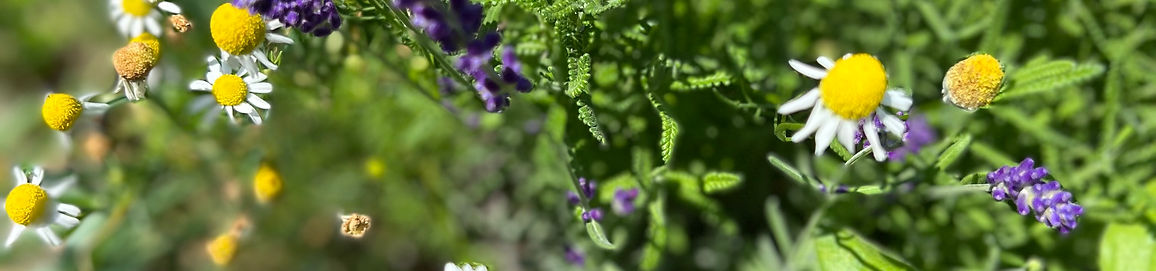
Chamomile and Lavender
Chamomile and lavender are two popular flowering herbs valued for their calming fragrance, delicate blooms, and natural wellness benefits. Together, they make an excellent addition to herb gardens, pollinator gardens, and cottage-style landscapes.
Chamomile, commonly grown as German chamomile or Roman chamomile, produces small daisy-like flowers with white petals and bright yellow centers. It is widely used in herbal tea, natural remedies, and skincare products. Chamomile grows best in full sun with well-drained soil and is easy to maintain, making it ideal for beginner gardeners.
Lavender, especially Lavandula angustifolia, features fragrant purple flower spikes and silvery-green foliage. Known for its relaxing scent, lavender is used in aromatherapy, culinary dishes, sachets, and natural home products. It thrives in full sun and sandy or well-draining soil and requires minimal watering once established.
Planting chamomile and lavender together creates a visually appealing, fragrant garden space while supporting beneficial insects such as bees and butterflies.
Companion Planting with Chamomile and Lavender
Companion planting chamomile and lavender helps improve plant health, attract pollinators, and reduce pest pressure naturally.
Chamomile is often referred to as a “plant doctor” because it can enhance the growth and flavor of nearby herbs and vegetables. It attracts beneficial insects like hoverflies and predatory wasps that help control aphids and other garden pests.
Lavender’s strong fragrance naturally repels mosquitoes, moths, and some unwanted insects. At the same time, it attracts pollinators that increase flowering and fruit production in surrounding plants.
These two herbs share similar growing requirements, including full sun and well-drained soil, making them compatible companions in the same garden bed.
Chamomile grows well near cabbage, onions, cucumbers, and herbs such as basil and mint. Lavender pairs beautifully with Mediterranean herbs like rosemary, thyme, and sage, which prefer dry conditions. It is also commonly planted near roses to help deter aphids.
Planting Tips for Success
Choose a sunny location with excellent drainage, as lavender does not tolerate soggy soil. Space plants properly to allow airflow and reduce the risk of fungal issues. Water regularly while plants are young, then reduce watering once they are established to encourage strong root systems.
Chamomile and lavender are a powerful herbal pairing that offers beauty, fragrance, pollinator support, and natural pest control. Whether you are creating a relaxing herb garden or exploring companion planting techniques, this combination provides both visual appeal and practical benefits for sustainable gardening.


